
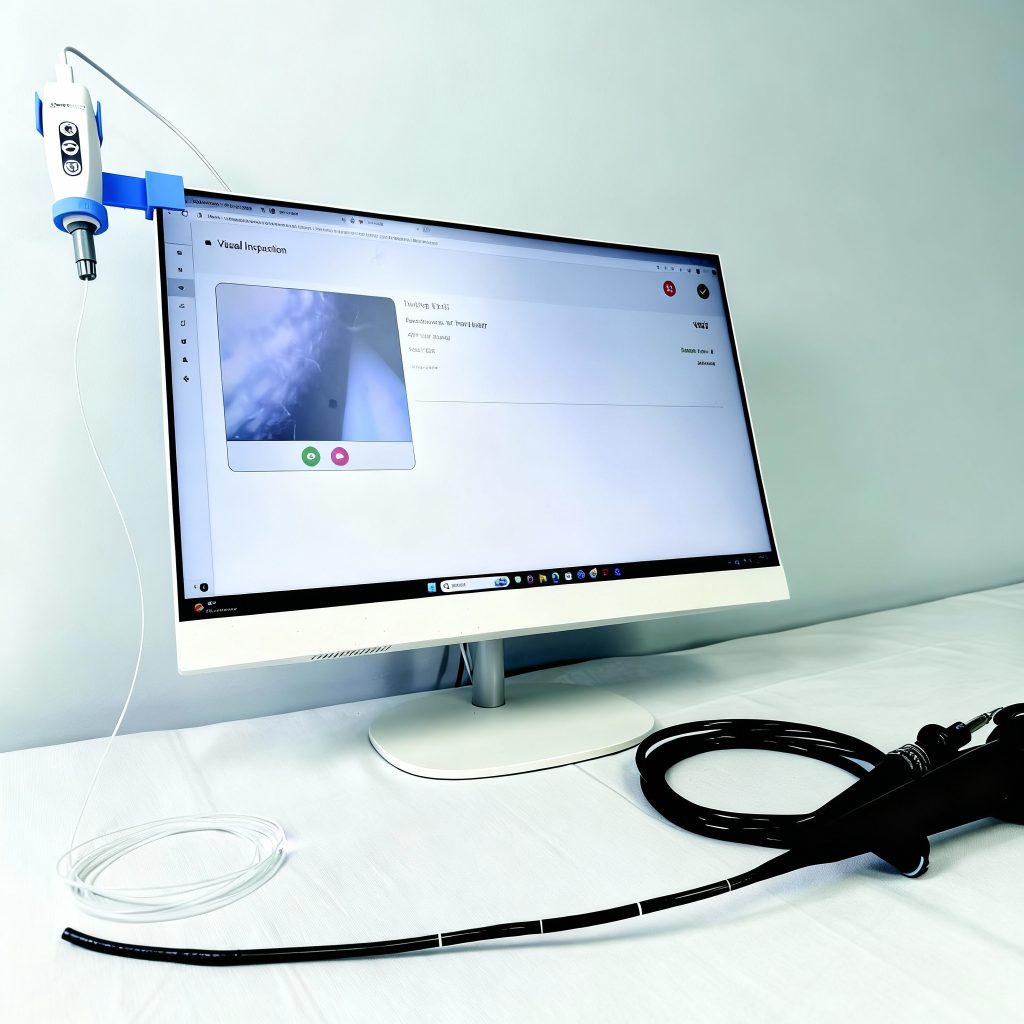


Next Gen AI Visual Inspection Borescope
Our flagship monitoring system uses bioluminescence technology for real-time cleanliness assessment. Ideal for high-traffic areas and critical environments.
- Offline Functionality – Automatically sync data with the CleanRead™ Contamination Reporting web portal when Wi-Fi is accessible.
- RFID & Barcode Capability – Scan RFID tags and barcodes on equipment to associate them with test points for easy initiation of tests.
- AI based Test Scheduling – Set up daily testing schedules through the dashboard.
Advanced AI powered visual inspection tool for cannulated instruments.
The Clean Read Visual Inspection Borescope from Empire Bio Diagnostics is an advanced, AI-powered imaging system engineered to help Sterile Processing professionals quickly and accurately inspect the internal channels of endoscopes and cannulated instruments. Its next-generation camera technology and intelligent software allow users to detect debris, residue, scratches, moisture, and structural defects that cannot be seen with the naked eye.
Built for the demands of modern reprocessing, the Clean Read Borescope features a compact, all-in-one design—a high-definition handheld camera paired with a fully integrated 21-inch medical-grade display, eliminating the need for a separate CPU tower. Technicians gain crystal-clear visualization and optimized workflow speed with intuitive controls and automated lumen enhancement.
The system’s cloud-enabled platform allows for instant image capture, secure storage, case comparison, and documentation—supporting traceability, audit readiness, and better compliance with AAMI, SGNA, AORN, and FDA inspection standards.
Unlike traditional borescopes, the Clean Read solution delivers:
- AI-assisted abnormality detection
- High-resolution imaging & live video
- Automated documentation with image/video archiving
- Seamless user experience designed for Sterile Processing workflow
- Engineered for accuracy. Designed for compliance. Built for safer reprocessing outcomes.
Engineered for accuracy. Designed for compliance. Built for safer reprocessing outcomes.
- AI powered inspection – AI auto detects the abnormalities inside the endoscope channel.
- HD Ready – High resolution images and live video feeds.
- Onboard storage – Ability to store, archive and share images and videos.
Features
- High-definition camera with 120 degree field of view
- Fully integrated LED light source with adjustable brightness control for sharper images
- High quality 21 inch color display
- Minimum insertion diameter: 1.8mm; working length: 3.0 meters; will also offer variable diameters and lengths upon request
- System is water-resistant and easy to clean with enzymatic detergent/disinfectant
Scope Inspection Guidelines and Recommendations
- FDA (October 2014) – FDA Medical Safety and Alert document mentions “inspecting the inside of the devices (arthroscopic shavers) and using an endoscope to inspect the channels of the shaver handpiece.”
- CDC – “Careful visual inspection should be conducted to detect the presence of any residual soil. Inspection using magnification and additional illumination might identify residues more readily than the unaided eye. Users should inspect every device for organic soil and contamination in a simple functionality test.”
- SGNA – “Visual inspection is recommended to make sure the endoscope is visibly clean.” “Inspect equipment surfaces for breaks in integrity that would impair either cleaning or disinfection/ sterilization.”
- IAHCSMM – (Endoscope Reprocessing Manual, 2017, pg.61) “At the workstation, each endoscope must be carefully inspected for cleanliness, proper function and possible defects; therefore, adequate lighting and magnification tools are essential.”
- 2017 AORN Guidelines – “Lighted magnification should be used to inspect endoscopes and accessories for cleanliness and damage.4” “Endoscopic cameras and borescopes penetrate the lumen and allow for improved visual inspection.4”
- ANSI/AAMI ST91: 2015 – “Tools such as video borescopes of an appropriate dimension (length and diameter) may be used to visually inspect the internal channels of some medical devices.3”