

Diabetes Management · Sterile Mate
Diabetes Management
from Sterile Mate.
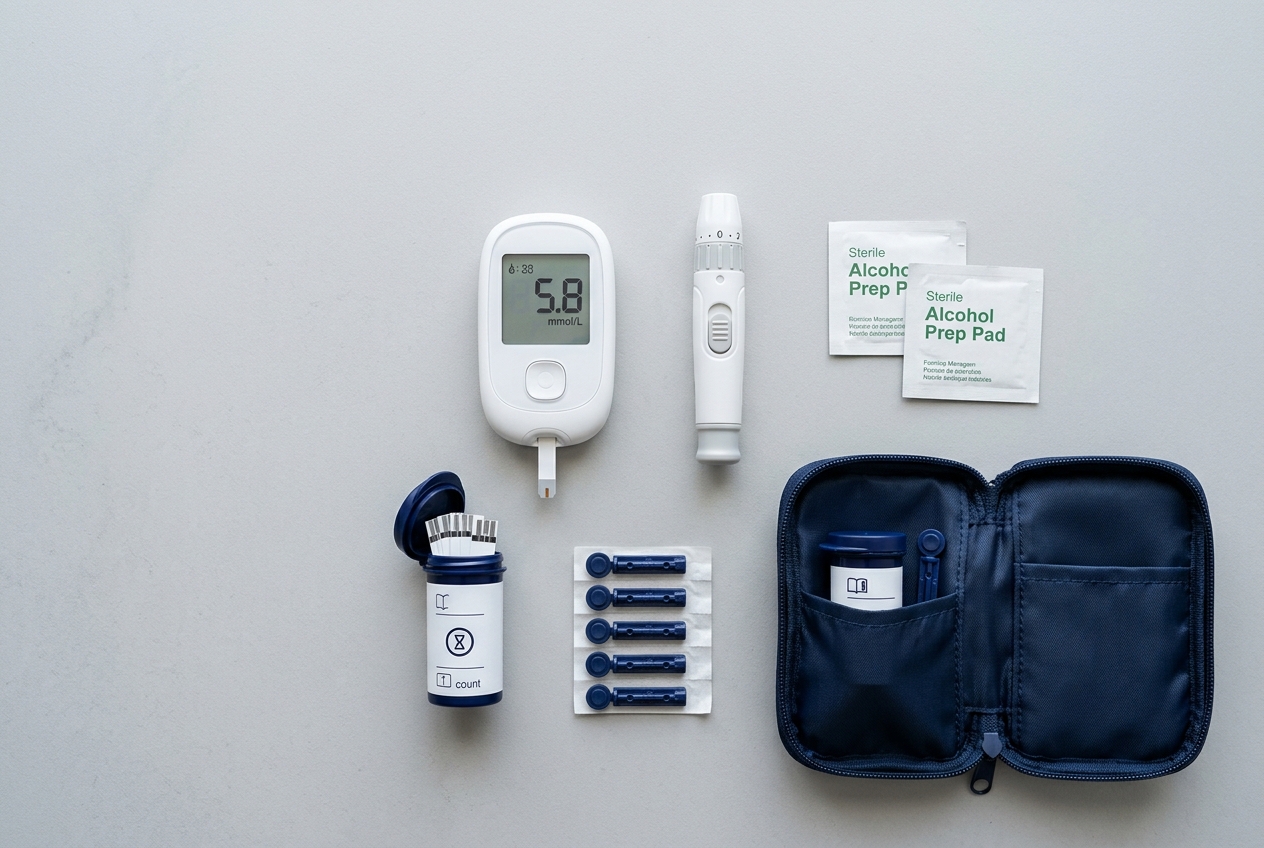
We supply the whole testing chain — not just the meter that gets photographed, but the strips and lancets that quietly decide whether the program survives past day ninety.
Blood glucose kits, test strips in 50 and 100 count, easy-twist lancets, insulin syringes and pen needles — with blood pressure monitors, scales and oximeters alongside, because the diabetic patient in your panel rarely has only one chart.
Why we built this line
The meter is rarely
what fails.
A program buys meters, hands them out at discharge, and discovers ninety days later that half the patients stopped testing. Not because the device broke — because the strips ran out and nobody owned the refill.
So we built the line around the consumables. A kit ships with 25 strips. At twice daily testing that is twelve days. Unless the refill is planned with the kit, the patient rations tests or quits — and the program reports an adherence problem that was really a supply problem.
Strips in 50 and 100 count, lancets in program volumes, standing refill schedules we hold and release on your calendar. No GPO contract required, drop-shipped to the patient's home or palletized to your clinic, whichever your program runs on.
What we supply
Three things, and the second two
are the ones that matter.
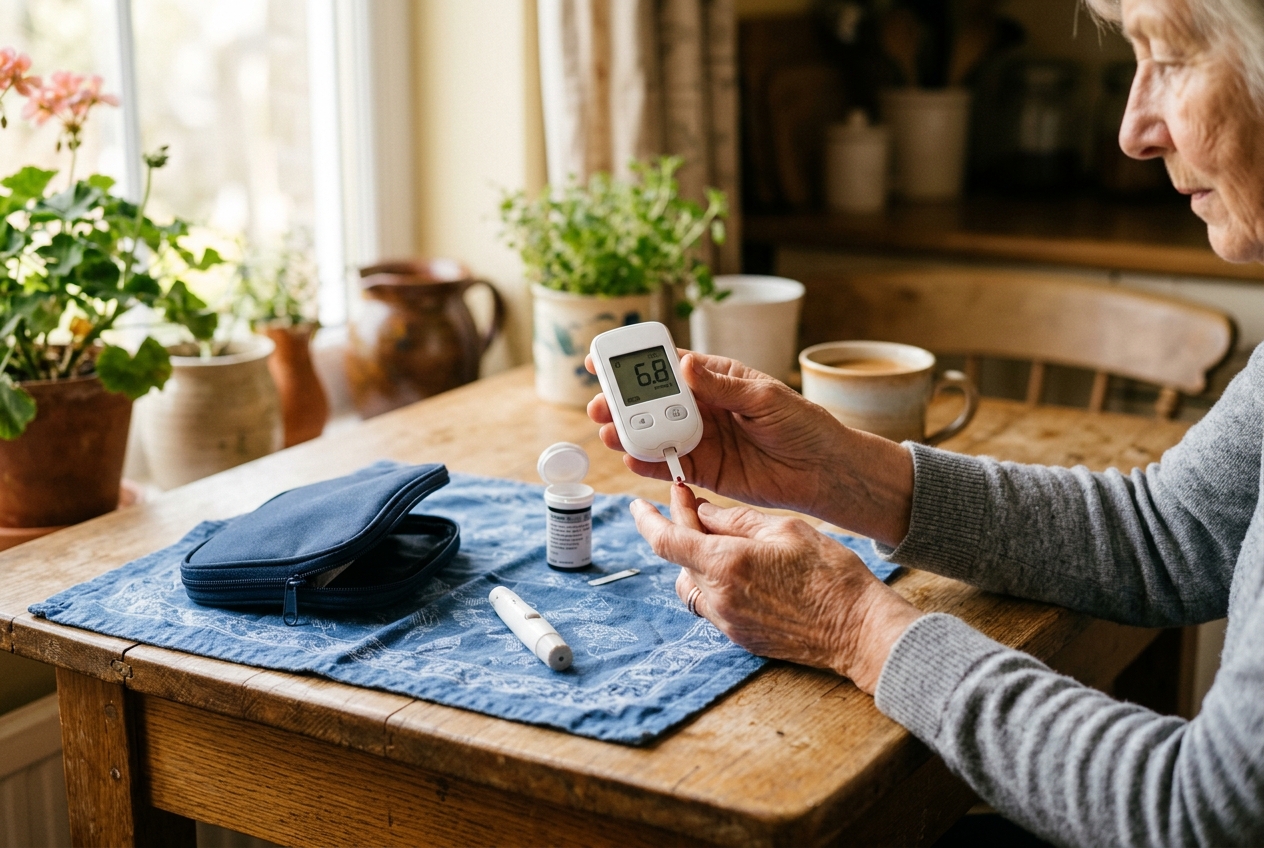
The meter
Blood Glucose Monitoring System Kit
DMD1079WHT · Vive Precision
Ships complete so it can be handed to a patient at discharge without a second order: meter, five-level lancing device, 25 test strips, 25 lancets, carrying case and batteries.
- Result in 5 seconds, no coding step
- 0.7 µL sample
- 500 readings stored with date and time
- Pairs with the Vive Precision app
The refill that keeps it alive
Blood Glucose Test Strips — 50 ct / 100 ct
DMD1082BLU50CT · DMD1082BLU100CT
No-code, pre-calibrated strips matched to the meter. Stocked in both counts so a program can set a refill cadence instead of reordering the week a patient runs dry.
- 50 ct (2 × 25) and 100 ct (2 × 50)
- Pre-calibrated — no setup error
- Storage range 39–86 °F, under 85% RH
- Standing refill schedules available
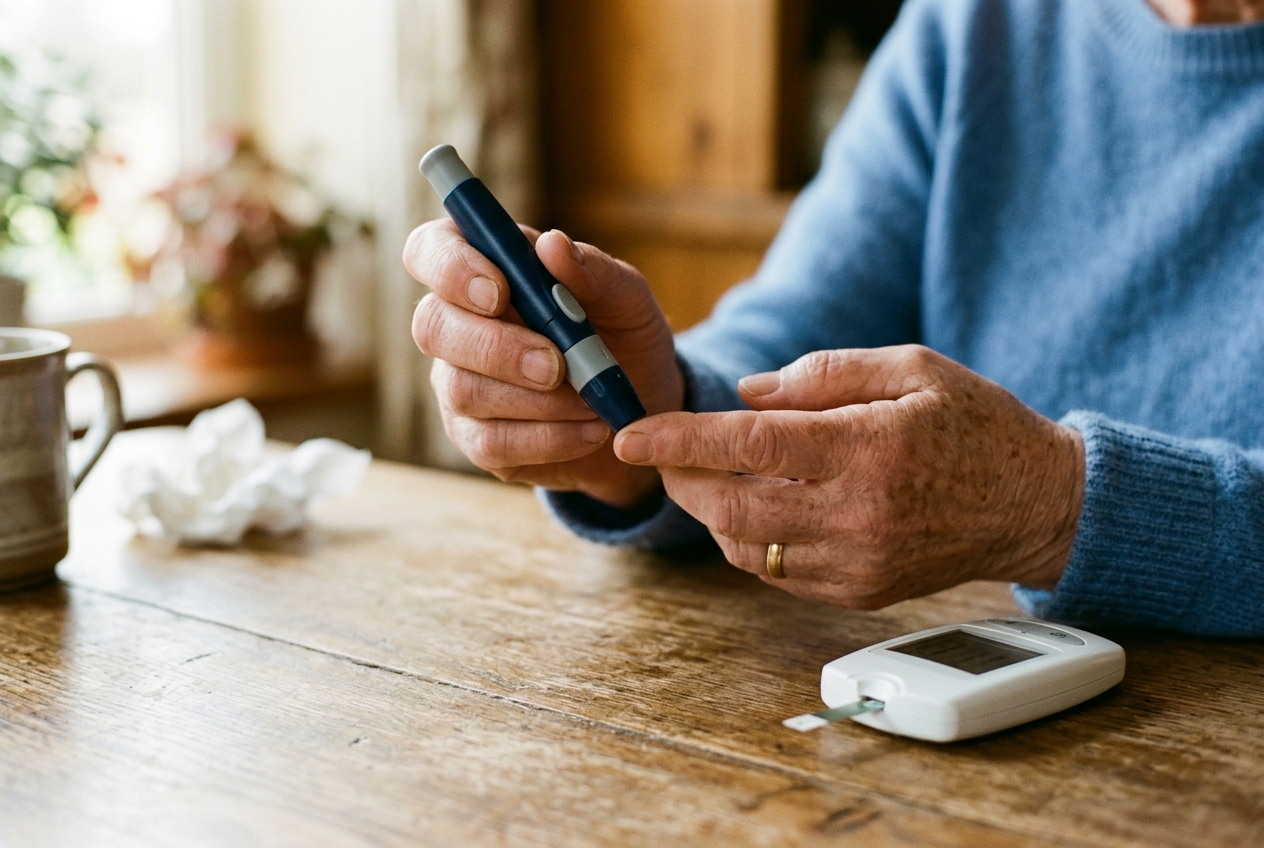
The part that decides adherence
Easy-Twist Lancets & 5-Level Lancing Device
Vive Precision · sterile single-use
Twist-off cap, sterile single-use, universal fit. Five depth settings let the stick be matched to the patient's skin instead of defaulting to the deepest — the single biggest reason patients quit testing.
- Twist-off cap, no exposed tip
- Five adjustable depth levels
- Sterile, single-use
- Bulk counts for program volume
Also on the same purchase order
Safety lancets, safety insulin syringes, standard insulin syringes, pen needles and alcohol prep pads — the Sol-M and Sol-Care diabetes care line, already stocked.
Beyond the meter
The expensive admission
is rarely a glucose reading.
It is a foot nobody looked at, an infection that started as a blister, or fluid that climbed for a week before anyone weighed the patient. These belong in the diabetes kit, not in a separate purchase order.
Feet and skin
Neuropathy means the patient cannot feel the problem starting. A daily foot check is the cheapest intervention in the program — it needs a light, a mirror and somebody who was told to do it.
- Daily foot inspection guidance
- Cushioning and offloading
- Skin and wound care supplies
Blood pressure
The diabetic patient in your panel is usually hypertensive too. Upper-arm monitors in standard through bariatric cuffs, sized at enrollment instead of guessed — and the same app holds both readings.
- Validated upper-arm monitors
- Standard to bariatric cuffs stocked
- One app for glucose and BP
Weight, oximetry, temperature
Complications announce themselves before the ED does. Daily weights catch fluid, oximetry catches perfusion, and a thermometer catches the infection that started quietly in a foot.
- High-capacity and talking scales
- Fingertip oximeters — SpO2 and pulse
- Infrared and oral thermometers
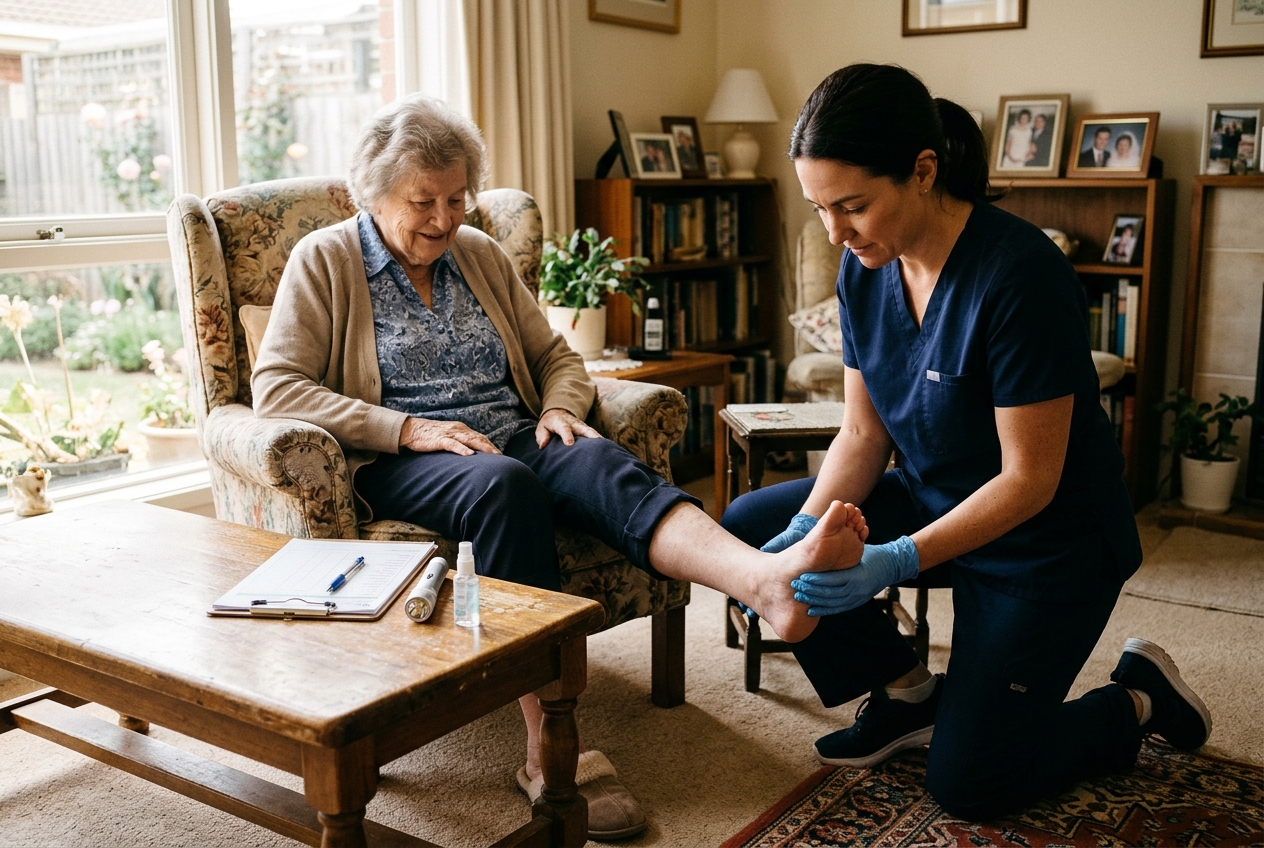
The daily check
A light, a mirror, and somebody who was told to do it.
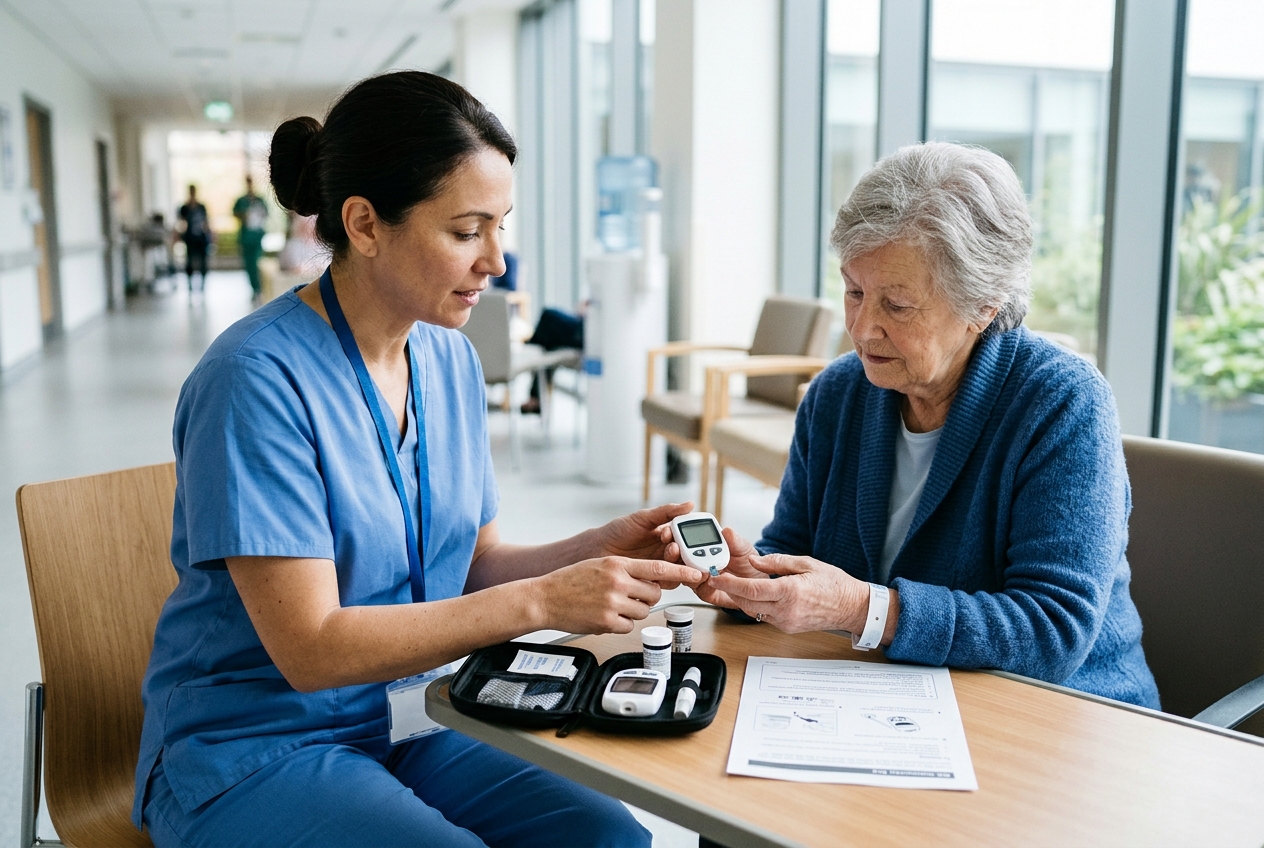
At discharge
One page a family member can follow — in the box, not emailed later.
Patient teaching
Four things that cause
most of the bad readings.
When a patient's home readings do not match the clinic, the device is usually fine. Each of these is teachable in about five minutes, and we will send the one-page version written for a patient rather than a clinician.
Wash, rinse, dry completely
Fruit juice, lotion or sugar residue on a fingertip reads high — sometimes dramatically. Alcohol alone leaves a residue of its own if it has not evaporated.
Side of the fingertip, and rotate
The side hurts less and bleeds more readily than the pad. Rotating fingers prevents the callusing that makes testing progressively more painful until the patient stops.
Match the depth to the skin
This is what the five levels on the lancing device are for. Defaulting to the deepest setting is how a program teaches its patients that testing hurts.
Store the strips like reagent chemistry
Left in a hot car or a steamy bathroom, strips drift — and the meter has no way to tell you. 39–86 °F, under 85% humidity, vial capped, expiry checked at every refill.
Plan the refill, not just the kit
Twenty-five strips is under four weeks.
Census climbs, staffing thins and carriers run holiday blackout days. The box a patient needs on December 22nd realistically has to be in your building by the 12th. We build the kits, stage the strip and lancet refills with them, hold the lot and release on your schedule.
FDA-registered manufacturer · Vive Precision
No GPO contract required
Drop-ship to the patient or bulk to the clinic
Standing refill schedules, held and released
Common questions
What buyers ask
before the first order.
What diabetes care products does Sterile Mate supply?
The full testing chain: Vive Precision blood glucose monitoring kits (meter, five-level lancing device, test strips, lancets, carry case and batteries), replacement test strips in 50 and 100 count, easy-twist lancets, plus the Sol-M and Sol-Care diabetes care line of safety lancets, safety insulin syringes, standard insulin syringes, pen needles and alcohol prep pads.
How long does a glucose kit's test strips last?
A standard kit ships with 25 test strips and 25 lancets. At twice-daily testing that is roughly twelve days, which is why we stage strip and lancet refills with the kit rather than after it. Strips are stocked in 50 count (2 × 25) and 100 count (2 × 50) packs with standing refill schedules available.
Do you ship diabetes supplies directly to the patient's home?
Yes. Kits and refills can be drop-shipped to a patient address with tracking returned to the case manager, or palletized in bulk to a clinic or program site. No GPO contract is required either way.
How fast is the Vive Precision blood glucose meter?
The DMD1079WHT returns a result in 5 seconds from a 0.7 µL sample using no-code, pre-calibrated strips, and stores up to 500 readings with date and time. It pairs with the Vive Precision app, which also holds blood pressure readings.
Is pricing published for diabetes care products?
No. Kits, strips and lancets are quoted against your program's enrollment volume so the meter and its consumables are priced together as one program rather than three separate line items you reconcile later.
Start a program
Tell us how many patients
and we will price the refills with it.
Kits, strips and lancets priced as one program at your enrollment volume — not three separate line items you reconcile later. A senior team member replies within one business day.